News · Fitness & Exercise
HIIT cut fat and held muscle in older adults, but barely
In a six-month trial of more than 120 healthy older adults, high-intensity interval training cut fat while holding onto muscle, unlike moderate exercise. The authors say the differences between intensities were small.
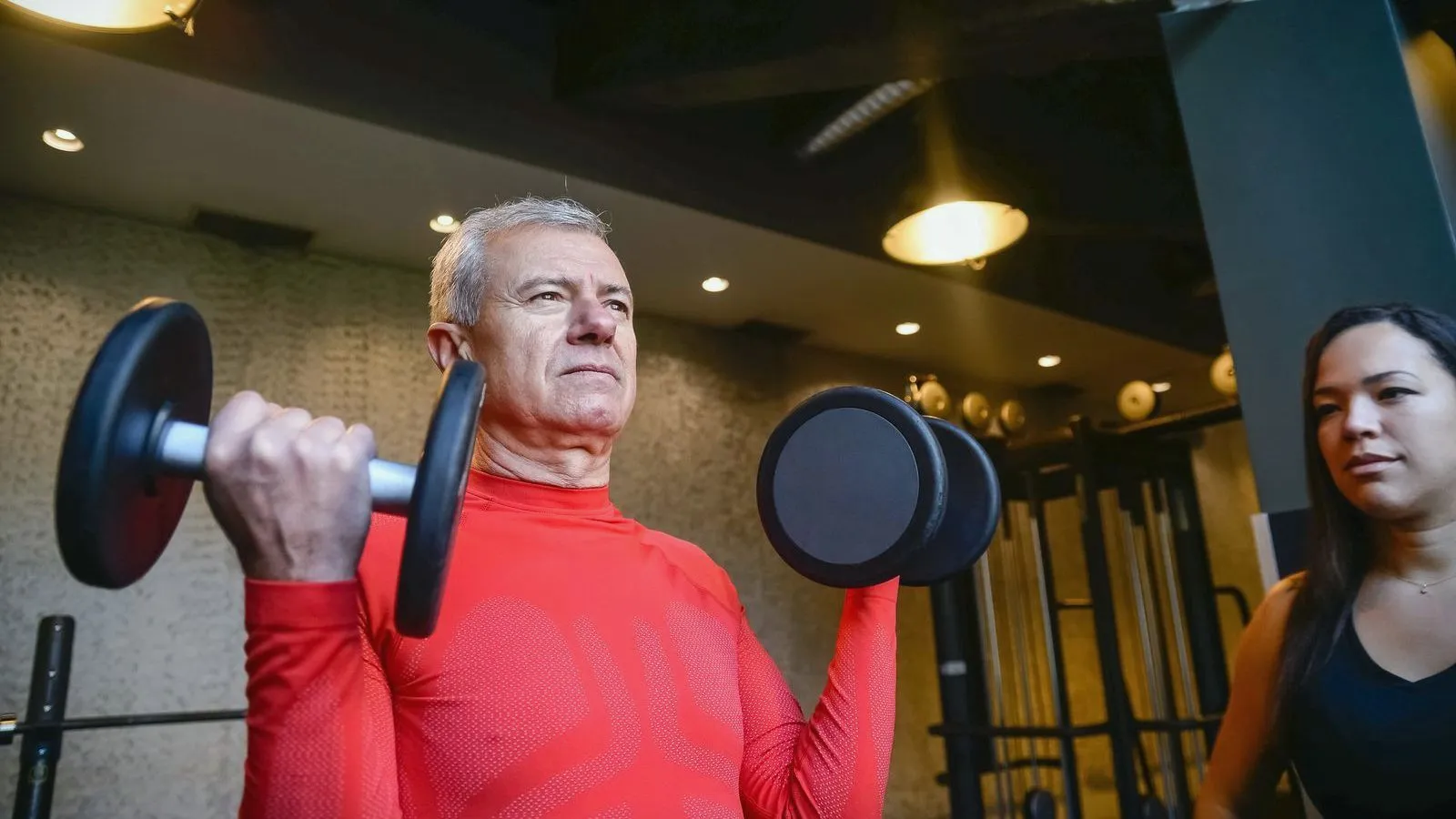
- 123 healthy older adults, average age 72, did supervised HIIT, moderate or low-intensity exercise.
- Both HIIT and moderate exercise lost more fat than the low-intensity control group.
- Only the moderate group also lost lean tissue; HIIT held its muscle and improved body-fat percentage.
- The authors stress the differences between the intensities were small and not clinically meaningful.
- Body composition was measured with DEXA scans at the start, 3 months and 6 months.
Older adults are told to exercise, but rarely told how hard. It matters: after about 60, the body tends to lose muscle even as it stores fat, and some routines trim the fat at the cost of the muscle.
Researchers at the University of the Sunshine Coast had more than 120 healthy older adults train three times a week for six months, comparing high-intensity interval training, or HIIT, with moderate and low-intensity exercise. Writing in Maturitas, they report that HIIT reduced fat and maintained lean mass, while gentler exercise did not fully hold the muscle.
What the HIIT trial did
Exercise advice for older people has mostly been “move more”, with less attention to whether intensity changes what you keep and what you lose. This trial, part of a larger randomized controlled trial, compared it head-on. Some 123 volunteers, average age 72 and mostly a healthy weight, were assigned to HIIT, moderate-intensity training, or a low-intensity active control, and trained three supervised sessions a week for six months. Their body composition was measured at baseline and at three and six months with DEXA, a detailed body scan.
Fat down, muscle spared
Both the high- and moderate-intensity groups lost fat, with reductions that were both larger than control. The difference showed up in muscle. Only moderate-intensity training was associated with reductions in fat-free mass, the muscle and lean tissue the body already sheds with age. HIIT held its lean mass, and it was the only group with a net improvement in body fat percentage. Both higher intensities produced comparable improvements in visceral fat, the kind wrapped around the organs.
Why would harder exercise protect muscle? The team’s hypothesis is mechanical. As one of the researchers, Mia Schaumberg, put it, “HIIT likely works better because it puts more stress on the muscles, giving the body a stronger signal to keep muscle tissue rather than lose it.”
How big is the HIIT advantage, really?
Here the study argues against its own headline. The authors are careful to say the changes were small and not clinically meaningful once measurement error is taken into account. The gains were real but slight, in apparently healthy older adults, over six months. This is a nudge, not a mandate. It does not mean gentler exercise is a waste, only that, if muscle is the worry, more effort may help hold it.
What the HIIT trial cannot show
None of this dents the basic message that exercise helps, and the trial reinforces it: every group that trained lost fat, since all exercise intensities produced fat loss. The wrinkle is about keeping muscle, which becomes harder and more precious with age. The lead author, Grace Rose, summed it up: “We found that high, medium and low intensity exercises all led to modest fat loss but only HIIT retained lean muscle.”
So any exercise is worth doing, and the best routine is the one you will keep. But if you can safely handle harder intervals, they may help you hold onto muscle as you lose fat. Anyone older or new to intense exercise should clear it with a doctor first.
For older adults, exercising at all is the real win; intensity is a small bonus for those who can manage it.
People also ask
Do I have to do HIIT to stay healthy?
No. Every exercise group in the trial lost fat, and any regular activity brings large health benefits. HIIT's edge was in holding onto muscle, and even that difference was small. The best exercise is the one you will do consistently.
What counts as HIIT?
Short bursts of hard effort separated by easier recovery, rather than a steady moderate pace. In this trial it was supervised, gym-based, and set to each person's heart rate. If you are older or new to intense exercise, get medical clearance and, ideally, supervision before starting.
Why does muscle matter so much with age?
After about 60, people gradually lose muscle and strength, which affects independence, balance and metabolism. Exercise that preserves muscle while trimming fat is therefore especially valuable, which is why the muscle-sparing result drew attention.
How strong is this evidence?
It was a supervised, randomized comparison with objective DEXA body scans, a solid design. But it was a sub-study of 123 healthy older adults over six months, and the authors caution the differences between intensities were small and not clinically meaningful.
References
- Rose G, Hume E, Blackmore D, et al. Exercise intensity influences body composition: a 6-month comparison of high-intensity interval, moderate- and low-intensity training among healthy older adults. Maturitas (2025).
- National Institute on Aging. Exercise and Physical Activity.
- NHS. Physical activity guidelines for older adults.