Explainer · Longevity & Aging
Lung nodules: what a spot on a lung scan means, how often it is cancer and how doctors decide what to do
Lung nodules turn up on about 30% of chest CT scans and at least 95% are not cancer. Size, appearance and a person's own risk decide between leaving a nodule alone, re-scanning it, sampling it and removing it.
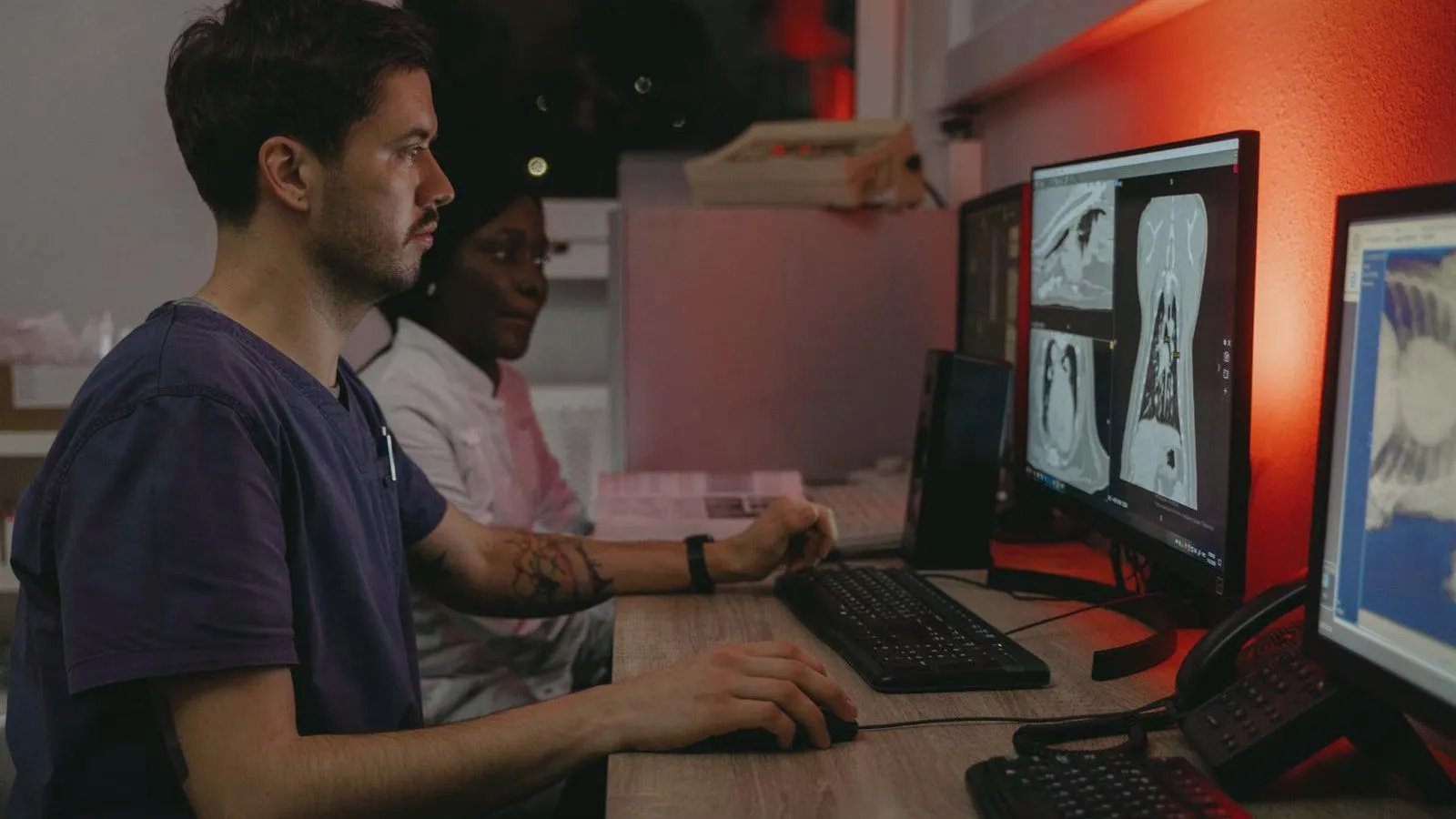
- A lung nodule is a small spot on a lung scan, measuring less than 3 centimeters across.
- Nodules show up on about 30% of chest CT scans, in roughly 1.6 million people a year in the US.
- At least 95% are benign. For nodules under 6 millimeters the chance of cancer is below 1%.
- Size, appearance and personal risk decide between a repeat scan, a biopsy and surgery.
- These are averages across many people, and they cannot say what one person's nodule will turn out to be.
Pope Leo XIV told a crowd on October 11 that doctors had found a small nodule in one lung. Two days later, on Tuesday, October 13, the pope had surgery in Rome, and the Vatican announced the result: Leo had been diagnosed with lung cancer and had part of the right lung removed, NBC News reported.
More than a million Americans are told every year that a scan has shown a lung nodule, and for nearly all of them the story ends differently. A nodule is a description of what a scan shows, and most turn out to be harmless and are never operated on. This explainer sets out what a lung nodule is, how often one is found, how often it is cancer and how doctors choose between watching and acting.
What a lung nodule is
A lung nodule is a small, roughly round spot that looks denser than the lung around it on a scan. The usual size limit, according to an Associated Press report carried by ABC News, is less than 3 centimeters (about 1.2 inches) across, and anything larger is called a mass.
Doctors also call them pulmonary nodules, pulmonary meaning relating to the lungs. Most are found on computed tomography (CT), a scan that builds a detailed picture of the chest from many X-ray images. The spots themselves have many causes, and NBC News, citing the American Cancer Society, listed irritants such as air pollution, diseases such as rheumatoid arthritis and cancer, and scar tissue from previous infections.
A 2022 review in JAMA, a leading medical journal, sorts nodules by how they look on CT. Solid nodules are dense throughout. Subsolid nodules are hazier, and the review splits them into two kinds: ground-glass nodules, faint misty patches through which the normal lung can still be seen, and part-solid nodules, which mix ground-glass and solid components. The distinction matters because each type carries a different chance of cancer.
How common lung nodules are
Nodules are very common. The JAMA review counts them in approximately 1.6 million patients a year in the United States, and on about 30% of chest CT images.
That yearly figure is close to an estimate from a study of a large US health system, whose authors counted every chest CT done for adult members over seven years: 415,581 examinations in more than 200,000 adult members between 2006 and 2012. Over that time the share of scans that showed a nodule rose from 24% to 31%.
Scaled up to the whole country, the authors estimated, that meant more than 4.8 million Americans having at least one chest CT scan and 1.57 million having a nodule identified, including 63,000 people given a new lung cancer diagnosis within 2 years. That is about 4 people in every 100 with a nodule.
Most of these nodules were incidental, found by chance on a scan done for some other reason. The authors concluded that the extra scanning was finding more nodules without finding more cancer, since more frequent nodule identification had brought no rise in diagnoses of cancerous nodules. The pope’s nodule was found in a similar way: the Vatican said Monday that no particular health issue had prompted what it called a routine checkup, the Associated Press reported.
How often a lung nodule is cancer
On the JAMA review’s figures, at least 95% of all pulmonary nodules that doctors find are benign, or not cancer. Most of the benign ones are granulomas, small knots of scar-like tissue left behind by an old infection or inflammation, or intrapulmonary lymph nodes, small immune glands that sit inside the lung.
Size is the strongest single guide, and smaller nodules are more likely to be benign. The review puts the chance that a nodule is malignant, or cancerous, at less than 1% for all nodules smaller than 6 millimeters (mm), about a quarter of an inch, and at 1% to 2% for those between 6 mm and 8 mm.
A Canadian study shows how this plays out among people having lung screening scans. Researchers tracked every nodule found on the first scan in two groups. In the first, 1,871 people had 7,008 nodules, of which 102 were malignant, and in the second, 1,090 people had 5,021 nodules, of which 42 were. Counted by person instead of by nodule, cancer was found in 5.5% of those with nodules in the first group and 3.7% in the second.
Hazy nodules follow different rules, and doctors first wait to see whether one lasts. A ground-glass nodule that persists beyond 3 months and is larger than 10 mm across has a 10% to 50% chance of being cancer, according to the review. That is a higher chance than for a solid nodule of the same size, but the cancers involved behave differently, because a malignant nodule that looks entirely like ground glass is typically slow growing. For part-solid nodules the dense portion is what counts, since larger solid components carry a higher risk of malignancy.
What raises the chance that a lung nodule is cancer
Size and type are only part of the picture. The Canadian team used its data to work out which features of the person and the nodule predicted cancer. On the person’s side the list included older age, female sex, emphysema (smoking-related damage to the air sacs) and a family history of lung cancer. On the nodule’s side it included larger size, a position in one of the upper lobes (the lungs have five lobes), a part-solid type, a spiky edge known as spiculation and, against intuition, a lower nodule count: having fewer nodules went with a higher chance of cancer.
The team concluded that such features can be combined into calculators that accurately estimate the probability that a nodule found on a first screening scan is malignant.
Smoking is the main cause of lung cancer, but a nodule in a person who has never smoked can still be malignant. According to the American Cancer Society, people who have never smoked or used tobacco account for about 20% of lung cancer cases. Leo is not known to have smoked.
How doctors decide what to do with a lung nodule
Four things guide the decision, according to the JAMA review: the probability that the nodule is malignant, the safety of testing, the likelihood that more testing will be informative, and the patient’s preferences.
For the smallest nodules, the answer is often to do nothing more. When an international group of chest specialists called the Fleischner Society revised its guidance for incidental nodules in 2017, it loosened it, raising the minimum threshold size for routine follow-up so that fewer tiny nodules now lead to repeat scans. It also made follow-up times flexible: they are now given as a range, to leave room for individual risk and preference.
For nodules in the middle range, the usual step is to look again later, because a cancer grows and a scar does not. The review says a nodule of 6 mm to 8 mm can be rechecked with a repeat CT scan of the chest in 6 to 12 months, with the timing depending on the person’s risk and how the nodule looks.
Solid nodules of 8 mm or more get closer attention. The review’s options start with surveillance imaging, which means monitoring for nodule growth with chest CT scans, and positron emission tomography (PET)-CT, a scan that shows how actively tissue is using sugar, as cancers tend to do. Beyond scans, doctors can take a biopsy, a sample of tissue examined under a microscope, without surgery, either through bronchoscopy, which passes a thin tube down the airways, or with a needle through the chest wall. The last option is surgical resection, which means cutting the nodule out. No kind of biopsy is perfect. Current methods yield a sensitivity of 70% to 90% for lung cancer, meaning they pick up that share of real cancers, so a single biopsy misses 10% to 30% of them.
Sometimes doctors skip the biopsy, and that choice can itself be telling. “When doctors decide to proceed directly to surgery rather than first obtaining a biopsy, it can suggest a higher level of concern on the lung scan,” Northwestern Medicine’s chief of thoracic surgery, Ankit Bharat, told NBC News. Even then the scan alone does not settle it, since spotting a nodule doesn’t confirm a cancer diagnosis, Bharat said.
In the pope’s case the operation gave the answer. Leo was diagnosed with adenocarcinoma, which NBC News described as a type of non-small cell lung cancer that tends to grow more slowly than other kinds. Before the result was known, Stephen Liu, a lung cancer specialist at Georgetown’s cancer center, told the Associated Press that if such a nodule is cancerous and caught and removed early, the prognosis, or likely outcome, is “excellent,” and surgery alone may be sufficient treatment.
Surgery has costs of its own, and Bharat set them out before the operation, when it was not yet known how much tissue would be taken. If surgeons needed to remove an entire lobe, the pope’s lung capacity could fall by as much as 25%, Bharat said, while smaller operations take less. The Vatican’s announcement said part of the right lung was removed. The JAMA review counts a person’s other illnesses, such as heart and lung disease, among the things that shape the choice for a larger nodule.
Lung nodules and lung cancer screening
Screening looks for lung cancer in people without symptoms, using low-dose CT. It works by finding nodules, so it finds a great many harmless ones.
The largest trial shows the scale. Between August 2002 and April 2004 it enrolled 53,454 people at high risk for lung cancer at 33 medical centers in the US. Half had three yearly low-dose CT scans and half had chest X-rays. Across the three rounds, 24.2% of the CT screening tests came back positive, and nearly all of those were false alarms, worrying results in people who turned out not to have cancer. In the low-dose CT group, 96.4% of the positive screening results were false positives, and in the X-ray group the figure was 94.5%.
The scans still saved lives. Measured in person-years, which add up the time each participant was followed, the death rate from lung cancer was 247 per 100,000 person-years with CT and 309 with X-rays, a reduction of 20%.
A later Dutch and Belgian trial measured nodules by volume and re-scanned the uncertain ones before sending anyone to a specialist. Of the screened participants, 9.2% needed at least one additional CT scan, and only 2.1% were referred for a suspicious nodule. Among the 13,195 men in the main analysis, lung cancer deaths ran at 2.50 per 1,000 person-years with screening and 3.30 without.
On that evidence the US Preventive Services Task Force (USPSTF), an independent panel that assesses screening, backs yearly scans for adults aged 50 to 80 years with a 20 pack-year smoking history who still smoke or quit within the past 15 years. A pack-year is one pack of cigarettes a day for a year, so 20 pack-years could be a pack a day for 20 years. The panel’s reasoning rests on timing: lung cancer caught at an early stage has a better prognosis and is easier to treat.
What the lung nodule numbers cannot show
One person’s nodule. The percentages are averages across thousands of people. A 1% chance does not say which nodule is the one.
People outside the studies. The cancer rates in the Canadian study and the trial results come from current and former smokers who were scanned on purpose. The health-system study’s estimate of 1.57 million people a year comes from scans done in routine care within one health system and extended to the country by calculation.
How the estimates were made. The JAMA paper is a narrative review, which means its authors summarized the research they judged relevant instead of pooling it by a fixed method. Its probabilities are ranges drawn from several studies.
Whether watching is always safe. Repeat scanning assumes that a short delay does little harm if a nodule proves to be cancer. That holds best for small and slow-growing nodules.
The pope’s outlook. The public reports give a diagnosis and an operation. They do not give a stage, and NBC News reported that it is not clear whether the pope will need more treatment.
Whether a nodule in a particular person calls for a repeat scan, a biopsy or an operation is assessed by their doctor.
A lung nodule is a common thing to be told about, and it seldom turns out to be cancer.
People also ask
What is a lung nodule?
It is a small, roughly round spot of denser tissue seen on a chest X-ray or CT scan, less than 3 centimeters across. Most are scars from old infections or small lymph nodes.
How often is a lung nodule cancer?
Rarely. A 2022 JAMA review puts the share that are benign at 95% or more. For nodules smaller than 6 millimeters the chance of cancer is under 1%, and for those of 6 to 8 millimeters it is 1% to 2%. The chance rises with size.
What happens after a lung nodule is found?
It depends on size, appearance and the person's risk. The smallest are often left alone. Mid-sized ones are usually re-scanned after 6 to 12 months to see whether they grow. Larger or more suspicious ones may lead to a PET scan, a biopsy or surgery.
What is a ground-glass nodule?
It is a hazy patch on a CT scan that does not hide the lung structures behind it. Ground-glass nodules that last more than 3 months and are larger than 10 millimeters carry a 10% to 50% chance of cancer, and cancers of this kind typically grow slowly.
Does a lung nodule need to be removed?
Most do not. Surgery is one of several options for larger nodules with a higher estimated chance of cancer. Whether a nodule in a particular person calls for a repeat scan, a biopsy or an operation is assessed by their doctor. This is general information rather than medical advice.
References
- Mazzone, P. J., Lam, L. Evaluating the Patient With a Pulmonary Nodule: A Review. JAMA, 2022.
- Lavanga, C., The Associated Press. Vatican says pope has lung cancer and had part of his right lung removed. NBC News, 2026.
- Syal, A. What to know about Pope Leo's lung surgery. NBC News, 2026.
- Barry, C., Winfield, N. What to know about Pope Leo's planned lung nodule surgery. ABC News / Associated Press, 2026.
- Gould, M. K., Tang, T., Liu, I.-L. A., et al. Recent Trends in the Identification of Incidental Pulmonary Nodules. American Journal of Respiratory and Critical Care Medicine, 2015.
- McWilliams, A., Tammemagi, M. C., Mayo, J. R., et al. Probability of Cancer in Pulmonary Nodules Detected on First Screening CT. New England Journal of Medicine, 2013.
- MacMahon, H., Naidich, D. P., Goo, J. M., et al. Guidelines for Management of Incidental Pulmonary Nodules Detected on CT Images: From the Fleischner Society 2017. Radiology, 2017.
- National Lung Screening Trial Research Team. Reduced Lung-Cancer Mortality with Low-Dose Computed Tomographic Screening. New England Journal of Medicine, 2011.
- de Koning, H. J., van der Aalst, C. M., de Jong, P. A., et al. Reduced Lung-Cancer Mortality with Volume CT Screening in a Randomized Trial. New England Journal of Medicine, 2020.
- US Preventive Services Task Force. Screening for Lung Cancer: US Preventive Services Task Force Recommendation Statement. JAMA, 2021.