News · Nutrition & Diet
Plant-based eating was not linked to stroke in 14,776 US adults, and results for heart disease were mixed
In a cohort built to include Black and rural Americans, a healthy plant-based diet went with 28% fewer coronary cases. An overall plant-based score went with fewer coronary deaths but more new cases, and none of three scores tracked stroke.
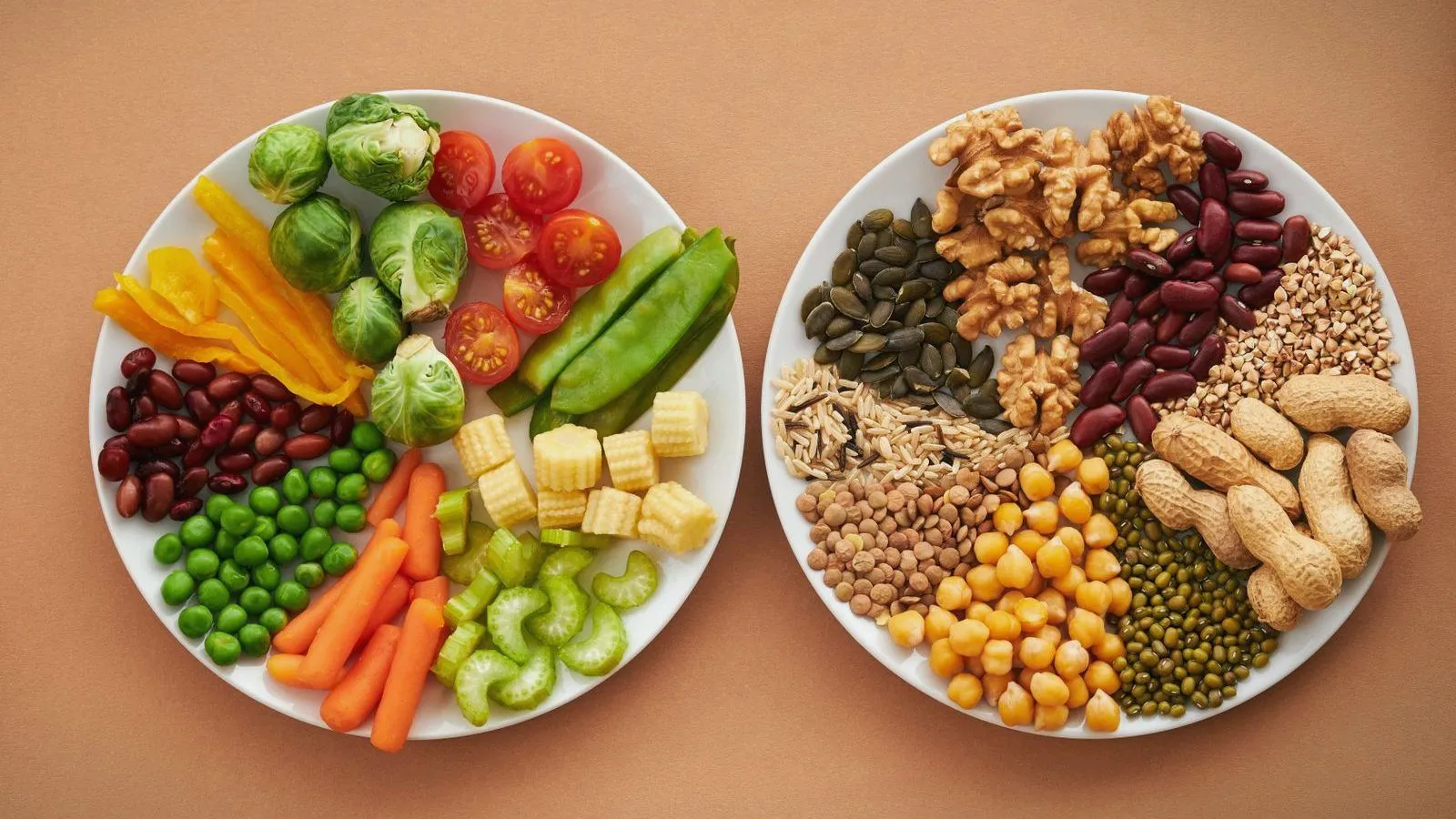
- A US study scored the diets of 14,776 adults three ways and followed them from 2003-2007 to 2019.
- None of the three plant-based scores was linked to stroke, of which there were 700 cases.
- The highest healthy plant-based scores went with 28% fewer new cases of coronary artery disease.
- The overall score went with 27% fewer coronary deaths but 60% more new cases, seen only outside rural areas.
- Diet was self-reported, and the study shows association only; the mixed results have no clear explanation.
Eating more plants and fewer animal foods is widely thought to protect the heart and blood vessels. When a long-running American study designed to include the people at highest risk of stroke tested that idea, it found no link with stroke, however plant-based eating was scored.
The paper, published in August in the American Journal of Clinical Nutrition, did find that a healthy plant-based diet went with fewer cases of coronary artery disease, the narrowing of the arteries that supply the heart and the usual cause of heart attacks. But a broader score that counts all plant foods alike pointed in two directions at once, toward fewer coronary deaths and more new coronary cases, a pattern the authors describe as mixed.
Why plant-based diets were tested in this stroke study
Most of what is known about plant-based diets and cardiovascular disease comes from a few large cohorts, several of them made up of health professionals. The new paper starts from who has been missing: Black and rural Americans carry a heavy burden of cardiovascular illness and death, yet both groups have had limited representation in plant-based diet research, the authors write. How much protection such a diet offers may differ by dietary composition and by the person eating it, so results from one population may not transfer to another.
The study they used, REasons for Geographic and Racial Differences in Stroke (REGARDS), was set up with exactly these groups in mind, unlike the cohorts in which plant-based scores were previously tested. Its founding paper describes a national study of African-American and white adults aged 45 and older, launched to find the causes of the excess stroke deaths in the Southeastern US and among African-Americans. The southeastern states with the highest stroke death rates are often called the stroke belt, and in an earlier REGARDS analysis of 16,068 people, 33.6% of participants were Black and 34.0% were residents of the stroke belt.
REGARDS is a cohort study, which follows a group of people over time and records who develops disease. Under its original design, participants are followed via telephone every six months to pick up any strokes.
How the study scored plant-based diets
The analysis, led by Emily Belarmino with Suzanne Judd as senior author, included 14,776 adults whose diets were recorded at the start, between 2003 and 2007. All three scores were calculated from food frequency questionnaires, long checklists that ask how often a person ate each of many foods over the past year.
The scoring system comes from a 2017 paper based on two long-running US cohorts, the Nurses’ Health Study and the Health Professionals Follow-up Study, whose authors started from the point that not all plant foods are necessarily beneficial. Each score treats food groups differently:
- Overall plant-based diet index (PDI). Every plant food raises the score, whether it is lentils or white bread. Animal foods lower it.
- Healthy plant-based diet index (hPDI). Healthy plant foods (whole grains, fruits and vegetables, nuts and legumes, oils, tea and coffee) raise the score. Less healthy plant foods (juices and sweetened drinks, refined grains, potatoes and fries, sweets) lower it, and so do animal foods.
- Unhealthy plant-based diet index (uPDI). The less healthy plant foods raise the score. Healthy plant foods and animal foods lower it.
None of these scores identifies vegetarians or vegans. They rank people by the balance of their diet, and a person can score high on any of them while eating meat.
Participants were divided into fifths on each score, and the top fifth was compared with the bottom fifth after adjusting for sociodemographic characteristics (such as age, sex, race, income and education), health risk factors and calorie intake. Through 2019 the team counted three outcomes: 700 strokes, 1,047 new cases of coronary artery disease (CAD) and 944 coronary deaths.
What the study found about plant-based diets and stroke
On stroke the result was the same for all three scores, overall, healthy and unhealthy: in the paper’s summary, plant-based diets were not associated with stroke. People whose diets were richest in whole plant foods had strokes at about the same rate as those whose diets were poorest in them, once other characteristics were taken into account. Nor was the answer different for Black and white participants, since across all the outcomes, associations did not differ by race.
What the plant-based scores showed for heart disease
For the heart, the three scores gave three different answers.
The healthy score. People in the top fifth for healthy plant-based eating had a 28% lower risk of developing coronary artery disease than those in the bottom fifth, with a range of uncertainty from 10% to 42%. For coronary deaths the picture depended on sex: a statistical test of whether the link differed between subgroups found that higher healthy scores went with lower mortality among females only.
The overall score. Here the results pulled apart. People in the top fifth had a 27% lower risk of dying of coronary artery disease, with a range from 10% to 41%, yet a 60% higher risk of being newly diagnosed with it, with a range from 9% to 133%. That second result depended on where people lived, with a higher overall score going with more new coronary disease among nonrural adults only.
The unhealthy score. It was not associated with CAD incidence or mortality, that is, with new cases or deaths, in either direction.
The authors do not claim to have resolved the contradiction in the overall score. They conclude that sticking more closely to a healthy plant-based diet went with lower coronary risk, while overall plant-based diets had heterogeneous associations, or mixed ones, with new coronary disease and coronary deaths. Their summary ends modestly, saying healthy plant-based diets appear to support heart health.
One feature of the overall score may be relevant. Because it rewards any plant food, a diet heavy in refined grains, fries and sweetened drinks can score as high as one built on beans and vegetables, so two people in the top fifth may be eating very differently.
How this fits with other studies of plant-based diets, stroke and the heart
The heart result for the healthy score matches the study that introduced these scores. In more than 200,000 US health professionals with 8,631 cases of coronary heart disease, the highest healthy scores went with a 25% lower risk, with a range from 17% to 32%, while the overall score showed a weaker link of 8%, with a range that reached to no difference.
On stroke the same cohorts did find something. With 6,241 strokes to analyze, people with the highest healthy scores had a 10% lower risk, with a range from 2% to 17%, and the authors concluded that people who adhered to a healthful plant-based diet had a lower risk of stroke. The overall score showed no clear link. A study with 700 strokes is much less able to detect a difference of that size than one with 6,241, so the two results do not necessarily conflict.
Stroke has been the awkward outcome for plant-based eating before. In EPIC-Oxford, a UK cohort with a large proportion of non-meat eaters, vegetarians had 22% lower rates of heart disease than meat eaters over 18 years, but 20% higher rates of stroke, with a range from 2% to 40%. That amounted to about three more strokes per 1,000 people over 10 years, mostly strokes caused by bleeding, and the stroke link did not weaken after further adjustment of disease risk factors.
Another US cohort has reported a split result of its own. It followed about 12,000 middle-aged adults for nearly three decades, and the scoring worked the same way, with higher intakes of animal foods lowering every index. The overall plant score went with 16% less cardiovascular disease, while the healthy score went with 19% fewer cardiovascular deaths but showed no link to new cases, which is the reverse of the pattern in REGARDS.
REGARDS itself has looked at diet in a different way before. A 2015 analysis let the data sort foods into patterns, among them a Southern pattern heavy in fried food, added fats, eggs, organ and processed meats and sugar-sweetened drinks, and its heaviest consumers had a 56% higher risk of acute coronary heart disease. A later REGARDS paper found that people eating most in line with a plant-based pattern had a 41% lower risk of being hospitalized for heart failure.
What the plant-based diet and stroke study cannot show
Association only. People who eat more whole plant foods differ from those who do not in income, education, exercise and much else. The analysis adjusted for many such characteristics, and others may remain.
Diet was measured once, by recall. A questionnaire filled in between 2003 and 2007 stood for what people ate over the following decade or more, and diets change, and people misremember.
Scores, not diets. The indexes rank the balance of foods. They do not pick out vegetarians, vegans or any named diet, and the same score can describe very different plates.
Fewer strokes than the largest studies. With 700 strokes spread across five groups, a modest link could have gone undetected, so a null result here does not rule one out.
Subgroup results are fragile. The link in women only, and the link in nonrural adults only, each came from testing subgroups. Such results are more likely than main results to arise by chance, and they need confirming in other studies.
A contradiction left standing. A score that goes with fewer coronary deaths and more coronary diagnoses in the same people is hard to interpret. It could reflect chance, differences in who gets diagnosed, or the mixed quality of diets that score high, and the study cannot say which.
Who was studied. Participants were Black and white adults aged 45 and over when they joined. The results may not apply to younger people or to other groups.
Whether a plant-based way of eating suits a particular person, and what it means for their own risk of stroke or heart disease, is assessed by their doctor.
In a study built around the Americans most at risk of stroke, the healthy plant-based score tracked fewer coronary cases and no score tracked stroke.
People also ask
Does a plant-based diet lower stroke risk?
In this study it did not. None of three plant-based diet scores was linked to stroke over more than a decade. An earlier, larger US study found about 10% fewer strokes with a healthy plant-based diet, and a UK study found more strokes among vegetarians, so the evidence is inconsistent.
What is a healthy plant-based diet index?
It is a score researchers calculate from a food questionnaire. Whole grains, fruits, vegetables, nuts, legumes, vegetable oils, tea and coffee raise it. Refined grains, sweetened drinks, potatoes, sweets and animal foods lower it.
Was plant-based eating linked to less heart disease in this study?
The healthy version was: people with the highest healthy plant-based scores had 28% fewer new cases of coronary artery disease than those with the lowest. The overall score, which counts all plant foods alike, gave contradictory results.
Why would a plant-based score go with more heart disease?
The study does not explain it. The overall score rewards any plant food, including refined grains and sugary drinks. The link to more new coronary cases appeared only in people living outside rural areas, and may be a chance result.
Do these results mean a plant-based diet is not worth following?
The study does not settle that. It measured diet once by questionnaire and can show association only. Whether a particular way of eating suits a particular person, especially one with heart disease, is assessed by their doctor. This is general information rather than medical advice.
References
- Belarmino, E. H., Blair, J., Zakai, N. A., et al. Plant-based diets, stroke, and heart outcomes: a prospective study of the REasons for Geographic and Racial Differences in Stroke Cohort. American Journal of Clinical Nutrition, 2026.
- Howard, V. J., Cushman, M., Pulley, L., et al. The Reasons for Geographic and Racial Differences in Stroke Study: Objectives and Design. Neuroepidemiology, 2005.
- Satija, A., Bhupathiraju, S. N., Spiegelman, D., et al. Healthful and Unhealthful Plant-Based Diets and the Risk of Coronary Heart Disease in U.S. Adults. Journal of the American College of Cardiology, 2017.
- Baden, M. Y., Shan, Z., Wang, F., et al. Quality of Plant-Based Diet and Risk of Total, Ischemic, and Hemorrhagic Stroke. Neurology, 2021.
- Tong, T. Y. N., Appleby, P. N., Bradbury, K. E., et al. Risks of ischaemic heart disease and stroke in meat eaters, fish eaters, and vegetarians over 18 years of follow-up: results from the prospective EPIC-Oxford study. BMJ, 2019.
- Kim, H., Caulfield, L. E., Garcia-Larsen, V., et al. Plant-Based Diets Are Associated With a Lower Risk of Incident Cardiovascular Disease, Cardiovascular Disease Mortality, and All-Cause Mortality in a General Population of Middle-Aged Adults. Journal of the American Heart Association, 2019.
- Shikany, J. M., Safford, M. M., Newby, P. K., et al. Southern Dietary Pattern Is Associated With Hazard of Acute Coronary Heart Disease in the Reasons for Geographic and Racial Differences in Stroke (REGARDS) Study. Circulation, 2015.
- Lara, K. M., Levitan, E. B., Gutierrez, O. M., et al. Dietary Patterns and Incident Heart Failure in U.S. Adults Without Known Coronary Disease. Journal of the American College of Cardiology, 2019.