Explainer · Supplements
Protein powder: what it adds to weight training, where the benefit levels off and what it does not do
Across 49 trials, protein supplements added about 0.3 kg of lean mass and 2.5 kg on the heaviest single lift to what weight training built alone. The gain appeared to stop near 1.6 grams of protein per kilogram a day, an uncertain estimate.
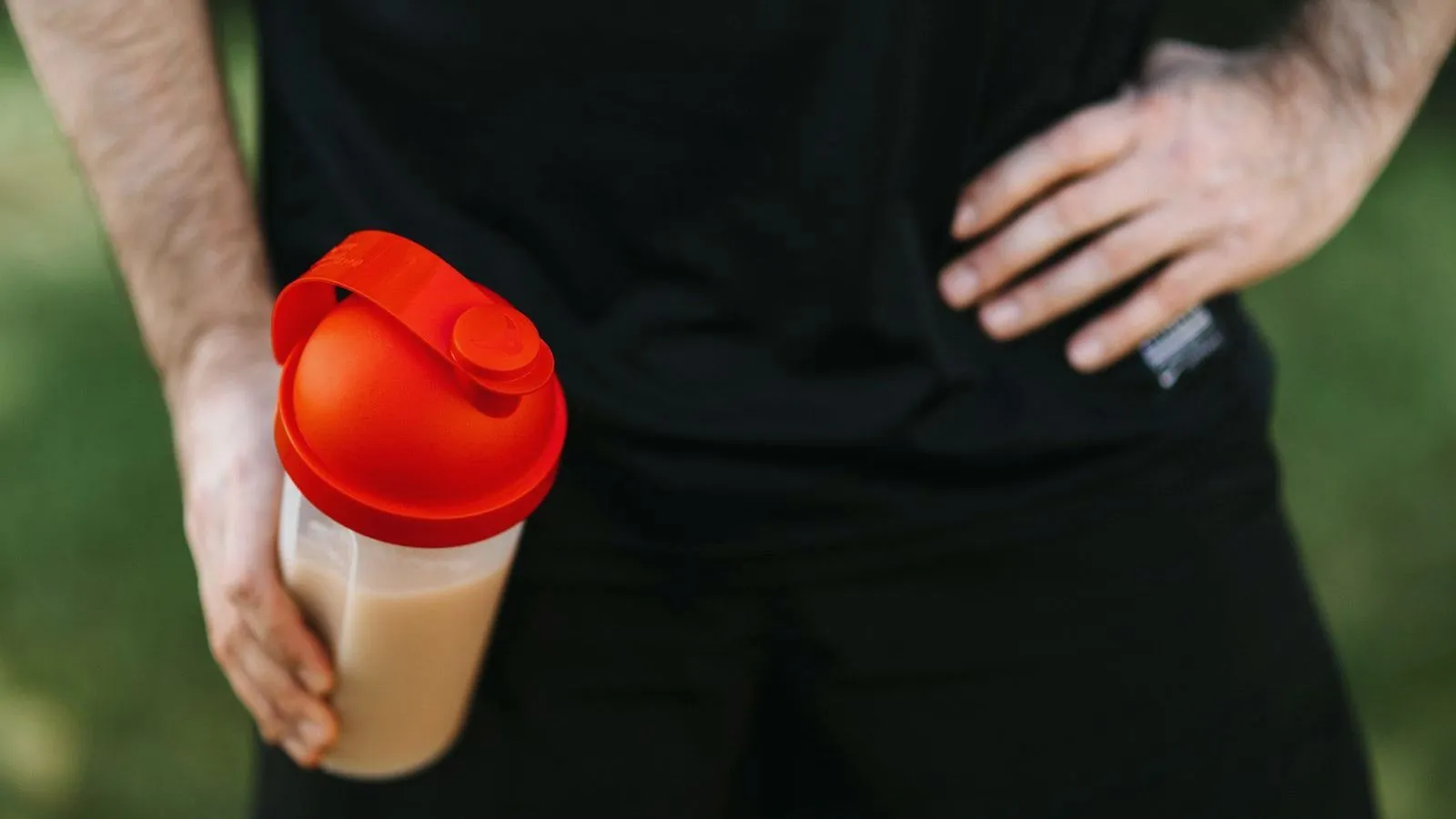
- Protein powder is concentrated protein from milk, soy, peas or other foods, sold as a dietary supplement.
- In 49 trials of people lifting weights, training alone added 1.1 kg of lean mass and the supplement 0.3 kg more.
- The extra gain appeared to stop at a total protein intake near 1.6 grams per kilogram a day, an uncertain estimate.
- People over 45 gained little extra in these trials, where they were given small doses of about 20 grams a day.
- The trials lasted 13 weeks on average, all involved training, and one author later declared a supplement-maker tie.
Protein powder was the subject of a Guardian question-and-answer piece on October 12, in which four dietitians took on what the paper called its most pressing protein questions, including whether a person can have too much. The same piece pointed out that US regulators don’t check the marketing claims promising improved muscle growth or recovery.
Those claims have been tested, though, many times over. The largest pooling of the trials found that protein supplements do add muscle and strength in people who lift weights. The addition is small next to what the lifting itself does, it stops at a certain daily intake, and in older adults, at the doses they were given, it was close to nothing. This explainer covers what protein powder is, what the trials show, where the benefit levels off and what is still unsettled.
What protein powder is
Protein powder is protein that has been extracted from a food and dried. Whey, a popular kind, comes from milk, and others are made from soy, peas or casein, another milk protein. The powders are sold as dietary supplements, which matters for how they are regulated, as described below.
Most people take them alongside resistance exercise training (RET), which works the muscles against a load such as weights, machines or bands. The reasoning is that muscle is built from protein, so more protein might mean more muscle, and the 2017 analysis at the center of this article calls the pairing a common practice, in athletes and recreational exercisers alike. The powders are a convenient way to raise protein intake, and the trials measured what happened when total intake went up.
What the trials show protein powder adds to training
That analysis appeared in the British Journal of Sports Medicine in 2017. It is a meta-analysis, pooling the results of many separate trials to get a steadier estimate than any one could give, and its authors searched for randomized trials in which healthy adults did resistance training and some were given extra protein.
To qualify, a trial had to last at least six weeks, with participants doing RET at least twice per week, and the supplement could not be mixed with other muscle-building agents such as creatine. In every trial the comparison group received an identical RET intervention but got either no supplement or a placebo, a look-alike product without the active ingredient. In all, 49 studies from 17 countries made the cut. They included 1,863 participants with an average age of 35, in training programs that ran from 6 to 52 weeks and averaged 13.
The team tracked two main outcomes: strength, measured as the one-repetition maximum (the heaviest weight a person can lift once), and fat-free mass (FFM), which is body weight minus fat and the usual stand-in for muscle.
Training by itself did most of the work: without any supplement, participants raised their one-repetition maximum by an average of 27 kilograms (kg) and gained 1.1 kg of fat-free mass. Extra protein added to both. It raised the strength gain by 2.49 kg, with a range from 0.64 to 4.33 kg, and the gain in fat-free mass by 0.30 kg, with a range from 0.09 to 0.52 kg. Put as shares, that is about 9% more strength and 27% more lean mass than training gave alone. Fat mass fell by 0.41 kg more with the supplement, and body weight did not change.
In the authors’ own judgment, the lifting is a far more potent stimulus for building strength than any protein added to the diet.
An earlier and smaller pooling by a different group, of 22 trials with 680 participants, had pointed the same way, concluding that extra protein increases muscle mass and strength gains during prolonged resistance training in both younger and older people. A later analysis of 74 trials, from a team that shared a senior author with the 2017 paper, used the same modest scale: eating more protein each day brought small additional gains in lean body mass (a close relative of fat-free mass) and in lower-body strength in healthy adults enrolled in resistance exercise training.
Where the benefit of protein powder levels off
The 2017 team asked a second question: is there a daily intake above which more protein adds nothing? To answer it they plotted the lean mass gained in each trial group against that group’s total protein intake from food and supplements.
The gains rose with intake and then went flat. Beyond total protein intakes of 1.62 grams per kilogram of body weight a day, extra protein brought no further gain in fat-free mass. For a person weighing 70 kg, 1.62 works out to about 113 grams of protein a day from all sources.
The figure is softer than it looks. Its range ran from 1.03 to 2.20, and although a line that rises and then goes flat explained the data better than a straight one, the difference did not pass the usual statistical test, so the bend could be a product of chance. Because of that wide range, the authors suggested that people seeking the largest possible gains might aim nearer 2.2.
For comparison, the US and Canadian recommended dietary allowance for adults is 0.8 grams per kilogram a day, and the people in these trials were already eating well above that before any supplement. Their average intake at the start was about 1.4 grams per kilogram, and the average supplement added about 35 grams of protein a day.
Who gains more and less from protein powder
Age was the first of two things that changed how much the supplement added to lean mass. When the trials were split at 45, younger participants gained an extra 0.55 kg of fat-free mass with the supplement, with a range from 0.30 to 0.81 kg. Older participants gained an extra 0.06 kg, with a range from a loss of 0.14 to a gain of 0.26 kg, which is no clear effect. The paper’s explanation has more to do with dose than with age. The amount given to older participants was surprisingly low, about 20 grams a day against 42 grams in the younger groups, and the older participants also ate less protein to begin with.
A 2022 review of reviews that looked only at older adults found a split result. Drawing on five meta-analyses, its authors found that protein combined with training built more lean mass than training alone but made no difference to strength gains, and they rated the evidence from moderate to very low in quality.
Training history was the second factor. People who already lifted regularly got more from the supplement, about 0.75 kg of extra fat-free mass, and the 2017 paper’s conclusion ties the two factors together, finding protein more effective at building fat-free mass in young or resistance-trained people than in older or untrained ones.
On sex differences the authors could say little. They saw none on limited data, and they acknowledged that far less work has been done in women, compared with men.
Timing and type of protein powder
Much of the marketing of protein powder concerns details, such as whey against plant protein or a shake straight after training, and the pooled trials give these little support.
In the 2017 analysis, the size of the dose taken after exercise made no difference to lean mass gains. The authors concluded that details such as timing, post-workout dose and protein source play a minor, if any, role in the muscle and strength people gain from training over a period of weeks.
Three researchers, all later co-authors of the 2017 paper, had earlier pooled trials on timing alone, comparing protein taken around a workout with protein taken at other times. Once total protein intake was taken into account, timing had no effect, and they wrote that their results refute the commonly held belief that protein taken in and around a training session is critical to muscle gains.
On type, a 2025 analysis of 12 studies with 261 participants compared whey and soy in adults aged 18 to 30. Neither protein clearly increased lean mass in that age group, in a pool far smaller than the 1,863 participants of the 2017 analysis, while whey was linked to better bench press and squat results in a small set of trials.
One of the Guardian’s dietitians, Kacie Vavrek of the Ohio State University’s Wexner medical center, made a related point about labels. “Organic protein powders don’t necessarily provide more protein or better muscle-building benefits than non-organic whey,” Vavrek said.
Protein powder safety: how much is too much
The Guardian’s headline question was whether a person can get too much, and Nancy Rodriguez, a professor of nutritional sciences at the University of Connecticut, answered with an example. A person taking five scoops of protein powder a day, Rodriguez said, is “not going to assimilate all of those amino acids in your body and live happily ever after.” Amino acids are the building blocks of protein, and the surplus, Rodriguez explained, has to be cleared by the liver and kidneys.
Whether high intakes strain healthy kidneys was the subject of a 2018 meta-analysis from a group that overlaps with the 2017 authors. It pooled 28 trials with 1,358 participants who ate higher-protein or lower-protein diets and measured glomerular filtration rate (GFR), a measure of how fast the kidneys filter blood. The change in GFR did not differ between the two kinds of diet. Because the review took only trials in adults without kidney disease, the result says nothing about people whose kidneys are already impaired. The authors named their own main limitation as the unclear risk of selection bias in the trials they included.
Contamination is a separate worry. As the Guardian pointed out, the US Food and Drug Administration does not safety-test protein powders or check them for heavy metals, elements such as lead, cadmium, arsenic and mercury that can be toxic.
Independent testing has found them. A 2020 paper in Toxicology Reports describes how 133 protein powder supplements were tested by the Clean Label Project, which reported measurable lead in 70% and measurable cadmium in 74%. The paper’s authors then asked whether those amounts were enough to matter, assuming one or three servings a day, and concluded that typical use would not result in adverse health effects from heavy metals. The highest estimated exposures were in powders sold for mass gain and the lowest in whey. The assessment rested on test results published by others, and for most products it had no brand names or serving sizes.
Certification schemes test products independently, though Nyree Dardarian, an assistant clinical professor at Drexel University, was measured about what they offer. “Third-party testing is a good sign, but it doesn’t make a product bulletproof,” Dardarian said.
What the protein powder evidence cannot show
Powder without training. Every trial in the main analysis involved resistance training at least twice a week. It does not show what a supplement does for a person who is not training.
Long-term results. The trials averaged 13 weeks. Whether a small edge at three months grows, holds or fades over years was not measured.
Older adults. Only 13 of the 49 trials enrolled people over 45, and most gave low doses. The weak result in that group may reflect the doses as much as age.
The exact threshold. The 1.6 figure has a range from 1.0 to 2.2, and the analysis behind it did not pass the usual statistical test.
Weight loss. The analysis accepted only trials in people who were healthy and not energy-restricted, that is, not dieting, so it does not cover people trying to lose weight while keeping muscle.
Who did the work. A correction published in 2020 added a declaration for one of the 2017 paper’s eleven authors: Brad Schoenfeld served on the advisory board for Dymatize Nutrition, a sports supplement manufacturer, at the time the paper was being written. The correction did not change any result. Several of the supporting analyses cited here share authors with the 2017 paper.
Whether a protein supplement makes sense for a particular person, including someone with kidney disease, is assessed by their doctor.
Protein powder, on this evidence, is a modest addition to weight training whose effect levels off, as best the trials can tell, at a total protein intake about twice the standard daily allowance.
People also ask
Does protein powder build muscle?
Powder without training was not tested in the evidence covered here. All 49 trials in the main analysis involved resistance training at least twice a week. In those trials, a protein supplement added about 0.3 kg of lean mass to the 1.1 kg that the training produced alone.
How much protein does it take to build muscle?
In the 2017 analysis, extra protein stopped adding lean mass once total intake from food and supplements reached 1.62 grams per kilogram of body weight a day. For a person weighing 70 kg that is about 113 grams. The estimate is uncertain, with a range from 1.03 to 2.20.
Is whey better than plant protein powder?
The 2017 analysis concluded that the source of the protein plays a minor role, if any, in gains over a period of weeks. A 2025 analysis of 12 trials in young adults found that neither whey nor soy clearly increased lean mass, though whey was linked to better bench press and squat results.
Is too much protein bad for your kidneys?
In a pooled analysis of 28 trials in 1,358 adults without kidney disease, the change in kidney filtration did not differ between higher-protein and lower-protein diets. The trials did not cover people who already have kidney disease.
Do protein powders contain lead?
Tests have found measurable lead and cadmium in many products. A 2020 risk assessment concluded that the reported amounts would not be expected to harm health at one to three servings a day. Whether a protein supplement makes sense for a particular person, including someone with kidney disease, is assessed by their doctor. This is general information rather than medical advice.
References
- Morton, R. W., Murphy, K. T., McKellar, S. R., et al. A systematic review, meta-analysis and meta-regression of the effect of protein supplementation on resistance training-induced gains in muscle mass and strength in healthy adults. British Journal of Sports Medicine, 2017.
- Gould, L. Can I get too much protein? Experts answer your questions on the popular supplement. The Guardian, 2026.
- Correction: A systematic review, meta-analysis and meta-regression of the effect of protein supplementation on resistance training-induced gains in muscle mass and strength in healthy adults. British Journal of Sports Medicine, 2020.
- Cermak, N. M., Res, P. T., de Groot, L. C. P. G. M., Saris, W. H. M., van Loon, L. J. C. Protein supplementation augments the adaptive response of skeletal muscle to resistance-type exercise training: a meta-analysis. American Journal of Clinical Nutrition, 2012.
- Nunes, E. A., Colenso-Semple, L., McKellar, S. R., et al. Systematic review and meta-analysis of protein intake to support muscle mass and function in healthy adults. Journal of Cachexia, Sarcopenia and Muscle, 2022.
- Vieira, A. F., Santos, J. S., Costa, R. R., Cadore, E. L., Macedo, R. C. O. Effects of Protein Supplementation Associated with Resistance Training on Body Composition and Muscle Strength in Older Adults: A Systematic Review of Systematic Reviews with Meta-analyses. Sports Medicine, 2022.
- Schoenfeld, B. J., Aragon, A. A., Krieger, J. W. The effect of protein timing on muscle strength and hypertrophy: a meta-analysis. Journal of the International Society of Sports Nutrition, 2013.
- Davis, B. E., Young, I., Giglotti, J. C., Yao, J., Tou, J. C. The Impact of Whey and Soy Protein Supplementation on Resistance Training in Young Adults: A Systematic Review and Meta-Analysis. Journal of Dietary Supplements, 2025.
- Devries, M. C., Sithamparapillai, A., Brimble, K. S., Banfield, L., Morton, R. W., Phillips, S. M. Changes in Kidney Function Do Not Differ between Healthy Adults Consuming Higher- Compared with Lower- or Normal-Protein Diets: A Systematic Review and Meta-Analysis. Journal of Nutrition, 2018.
- Bandara, S. B., Towle, K. M., Monnot, A. D. A human health risk assessment of heavy metal ingestion among consumers of protein powder supplements. Toxicology Reports, 2020.